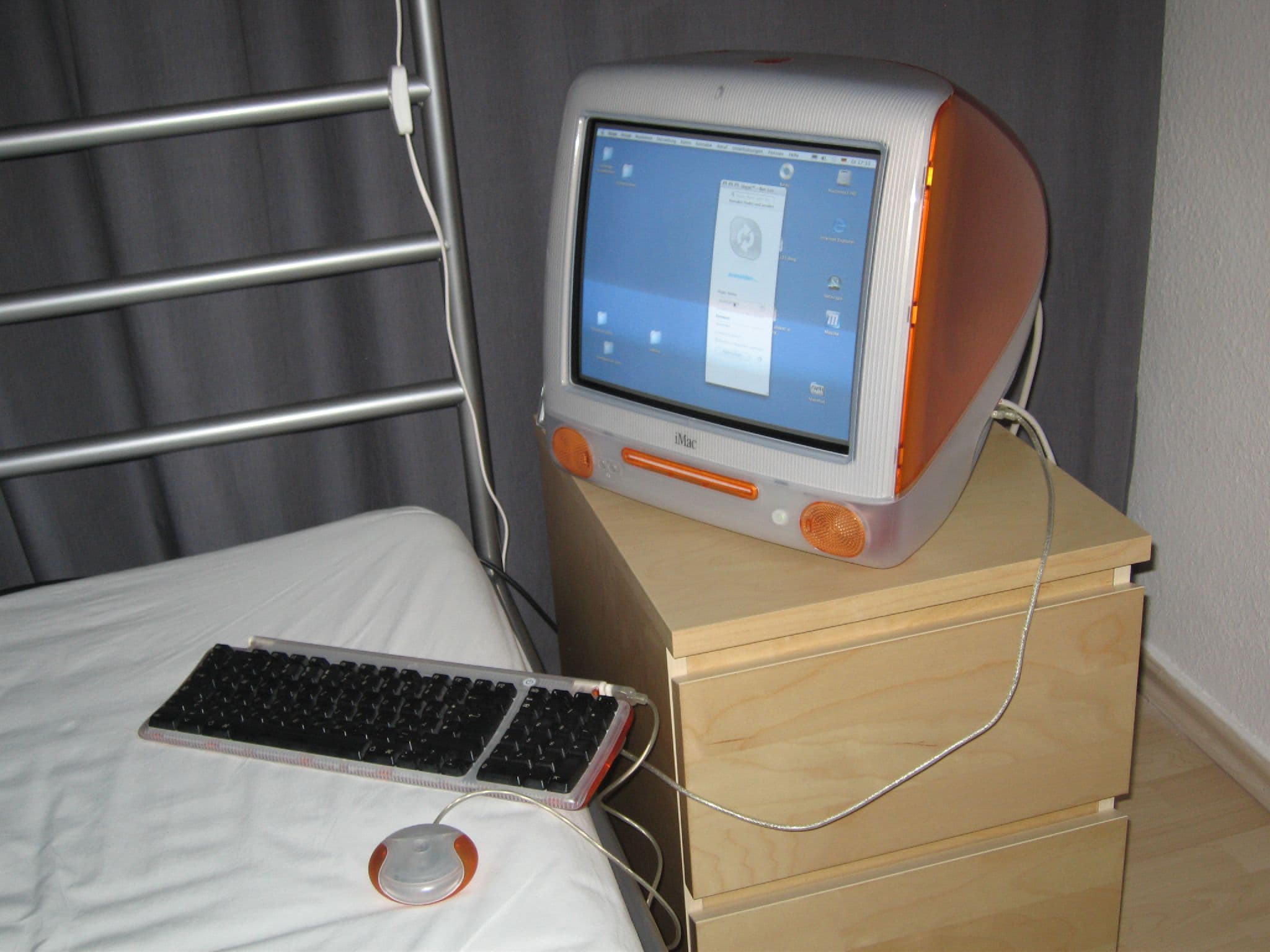
A Tangerine iMac G3 DV, photographed in 2007. Photograph by Spaceprince, via Wikimedia Commons, CC BY 2.0. Original image, unmodified.
Tangerine is an unusual word to find beside processor speeds and memory specifications.
It belongs in a fruit bowl. Yet in 1999, it also belonged on a computer desk. Apple's iMac came in Strawberry, Blueberry, Grape, Lime and Tangerine—a collection of names that made choosing a machine sound unusually personal.
Apple's archived specifications preserve that five-colour lineup alongside the technical details. The contrast is delightful: memory slots, modem connections, hard-drive capacity, then fruit. See Apple's 1999 iMac specifications.
A question beyond the specifications
Apple's January 1999 announcement presented colour as a deliberate part of buying a computer. Its Italian press release described giving customers a choice familiar from other consumer goods: selecting their favourite colour. The same announcement referred to the original Bondi Blue version remaining available while stocks lasted. Read the contemporary announcement.
There is a useful design idea in that invitation. You might need help deciding how much memory you require. You probably know whether you prefer orange or green.
Colour offers a way into the decision without requiring technical expertise. A computer is still a tool, but it is also an object you have to look at every day. Its place in a room deserves consideration alongside what happens on its screen.
Even this colourful story had limits
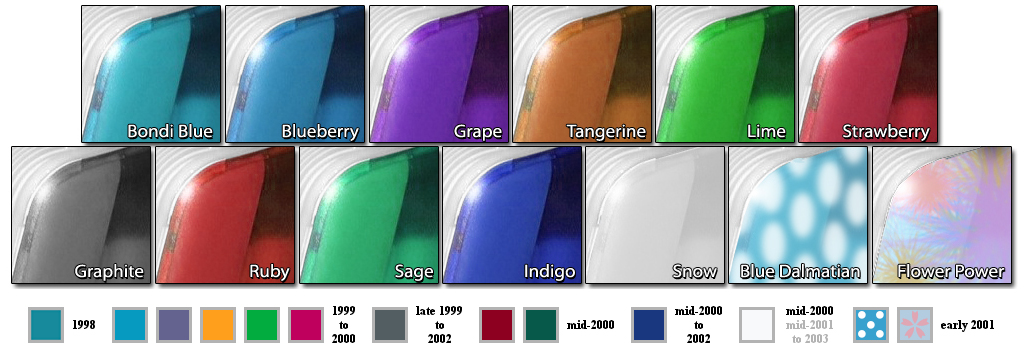
iMac G3 colours across multiple releases. Illustration by Grm wnr, based on a photograph by Masashige MOTOE; revised by True Tech Talk Time, via Wikimedia Commons, CC BY-SA 2.0. Reproduced without further changes.
The palette changed. In July 2000, Apple announced Indigo, Ruby, Sage and Snow alongside Graphite. But the colours were linked to different models: the entry-level iMac came in Indigo, while Sage appeared in the DV+ range and Graphite and Snow belonged to the Special Edition. Read Apple's July 2000 announcement.
That detail complicates the nostalgia in a worthwhile way. A product family can offer several colours without giving every customer the same choice.
It raises a question that extends well beyond computers. When you find the colour you love, can you buy it with the features you actually need? Or does choosing the finish also mean changing the model and the budget?
What a colourful case cannot prove
These records document products and Apple's marketing intentions. They do not isolate colour's contribution to sales, customer satisfaction or the company's fortunes. Design, software, pricing and technical capability all belonged to the package.
The lesson does not need a claim that orange plastic saved a business. The existence of the product is interesting enough: a familiar piece of equipment could have an expressive exterior and remain useful equipment.
Bring back the permission to choose
The worthwhile inheritance from the fruit-coloured iMac is permission to care about appearance.
That need not mean replacing a working device. We can ask for repairable products, long support lives and meaningful colour choices together. A finish should be something to enjoy for years, rather than a reason to discard last year's purchase.
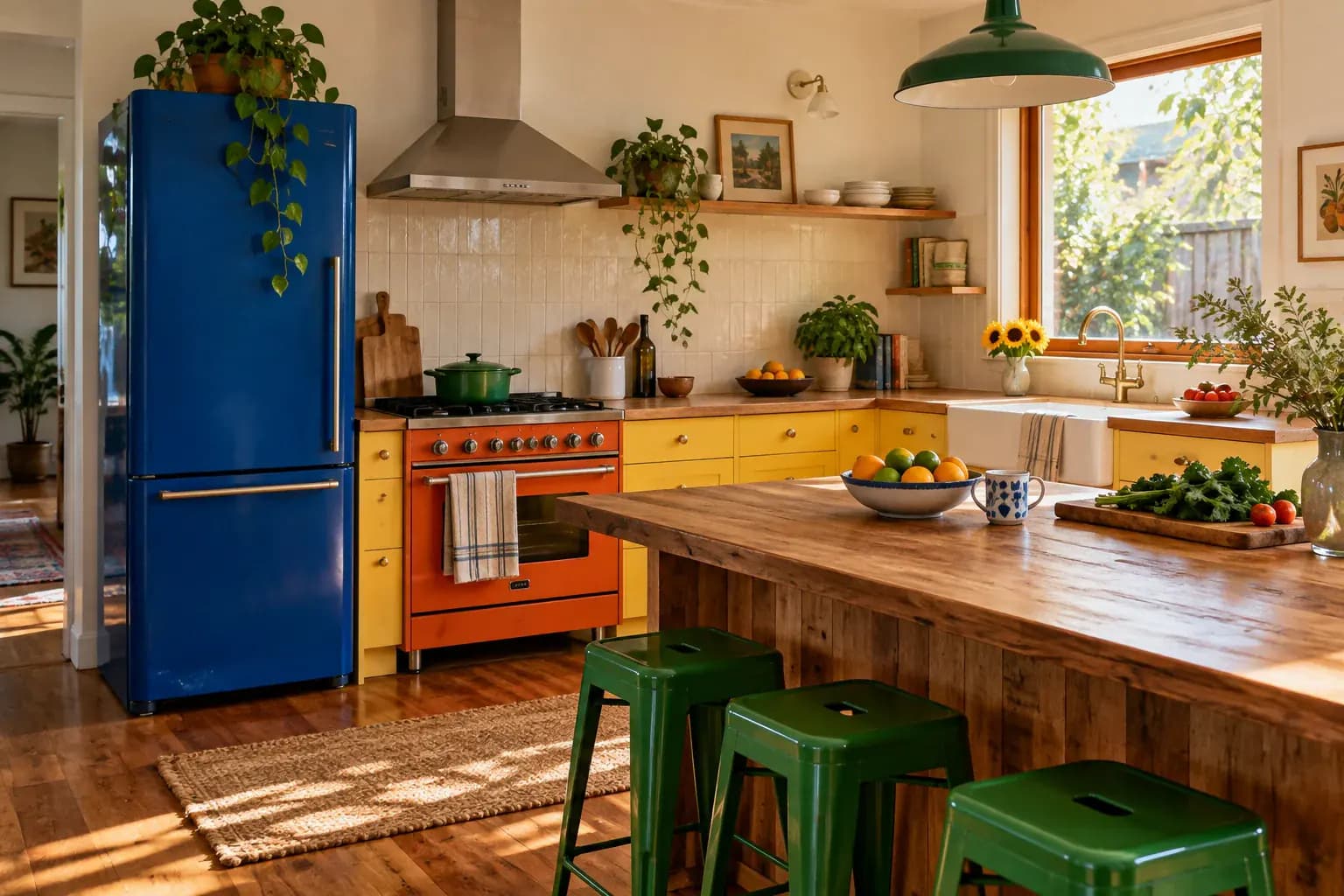
Imagine shopping for your next necessary household object and finding the right specifications, the right price and a colour you actually wanted.
Tangerine, perhaps.
What colourful piece of technology do you remember most fondly—and what would you like manufacturers to offer again?
Sources
- Apple: iMac (Slot Loading), technical specifications.
- Apple Italia: five-colour iMac announcement, 7 January 1999, Italian-language source paraphrased in English.
- Apple: new iMac colours and model configurations, 19 July 2000.
Sources accessed 27 September 2026.

Join the conversation
Keep it constructive, curious and kind. Comments are moderated before appearing.
No published comments yet. Start the conversation.