
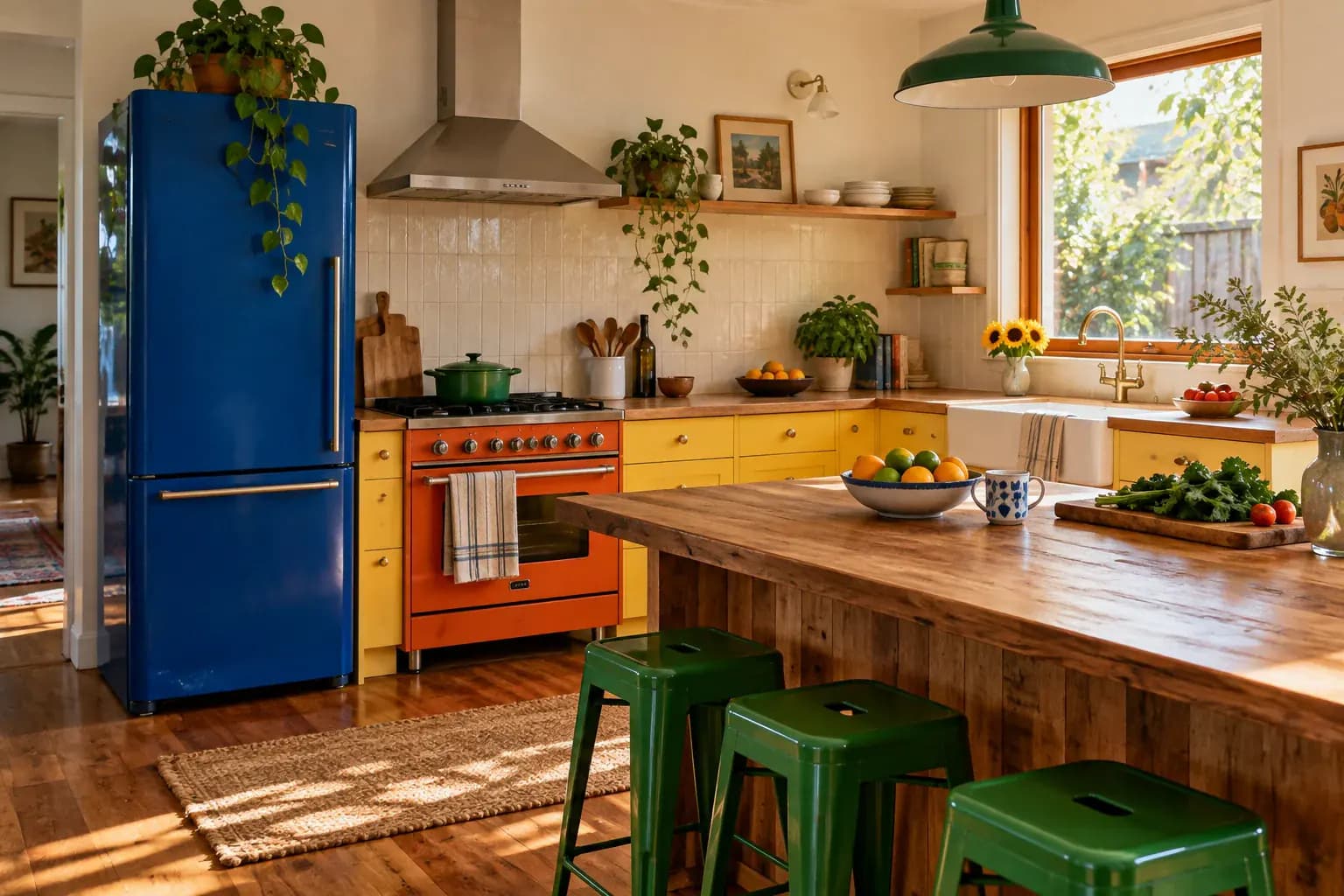
A colourful refrigerator can look nostalgic beside a stainless-steel one. Yet colour was once promoted as part of modern living. The history of post-war American kitchens offers a useful example of how customer interest and the practicalities of selling appliances could pull in different directions.
Colour was once the modern choice
Historian Regina Lee Blaszczyk describes manufacturers promoting coordinated colour in post-war America. Her account cites General Electric reporting that 80 percent of its major-appliance sales for new homes were in colour, and a McCall's survey in which more than half of respondents said they would pay extra for a coloured appliance.
Those figures concern particular businesses and surveyed consumers in that historical setting. They are not estimates of today's preferences or of all appliance sales at the time.
The inventory headache
The same account records retailers' concerns about stocking the right model, colour and shade, matching replacement panels, and managing inventory. Interest in colourful products did not remove the difficulties of keeping them available.
What this history tells us
These examples show some of the tensions involved in offering colour. They do not establish one explanation for the later popularity of stainless steel, or for every change in kitchen design since the 1950s.
Our takeaway is that the choice on a showroom floor can involve more than individual taste. What a retailer is prepared to stock matters alongside what a customer would like to buy.
Make a choice that suits your kitchen
If you need to replace an appliance, explore the finishes available on models that meet your practical requirements. Consider colour alongside dimensions, running costs, service support and how it fits the room.
You can also enjoy colour without replacing a working appliance. A favourite bowl, a textile or something you already own might bring the personality you want.
We would like useful, durable products to offer room for personal taste. The history makes that an interesting question to ask, rather than a reason to recreate an entire period kitchen.
Source checked 15 October 2026.

Join the conversation
Keep it constructive, curious and kind. Comments are moderated before appearing.
No published comments yet. Start the conversation.