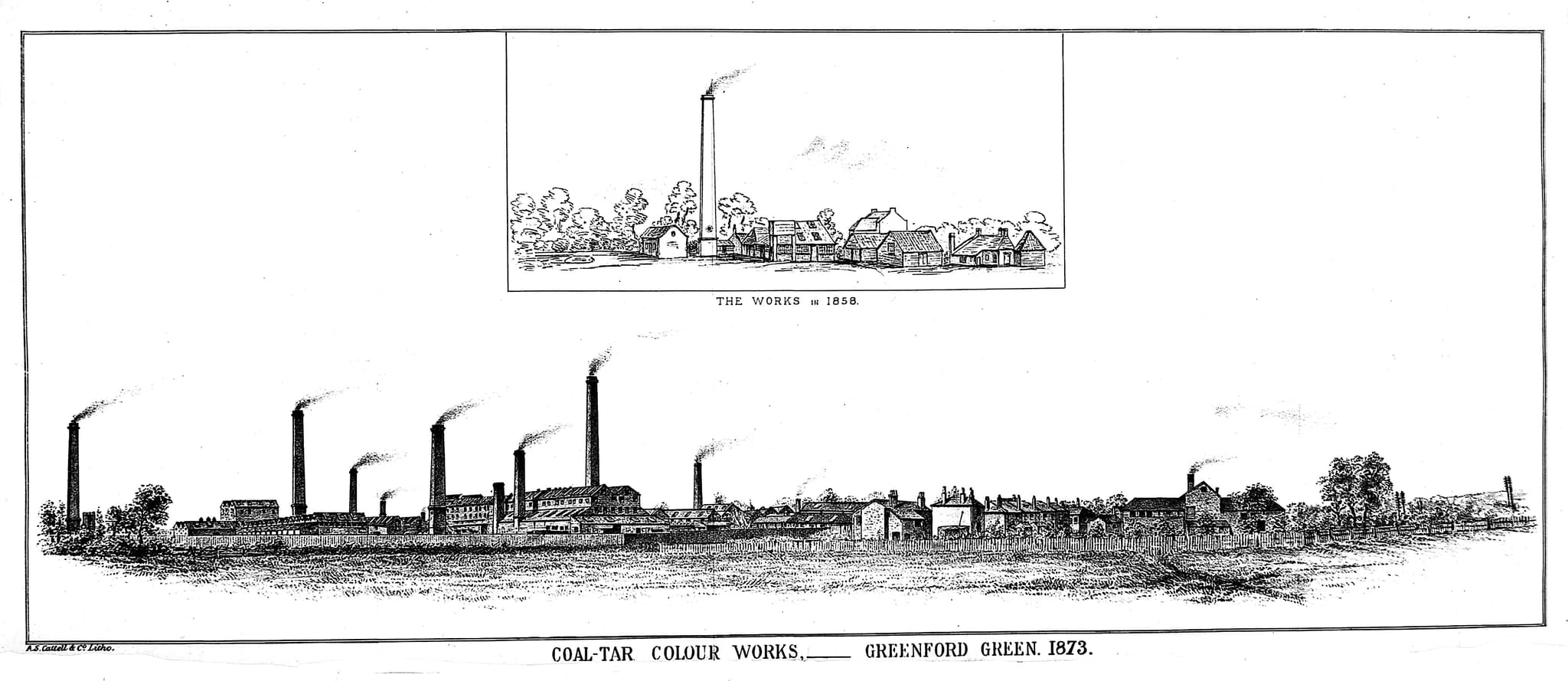
The Greenford colour works in 1858 and 1873. Wellcome Library, London, via Wikimedia Commons, CC BY 4.0. Original image, unmodified.
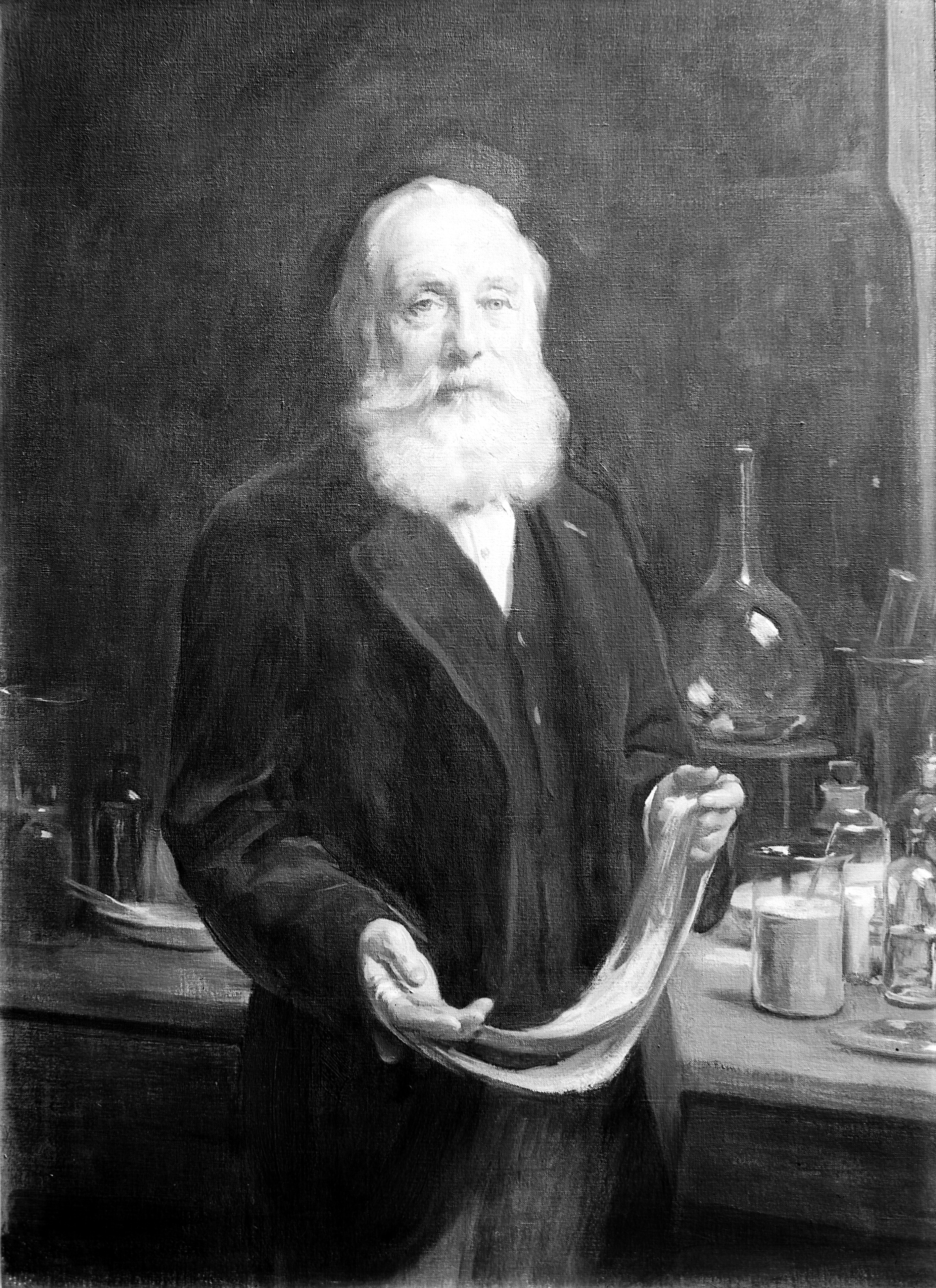
Sir William Henry Perkin (1838–1907). Wellcome Library, London, via Wikimedia Commons, CC BY 4.0. Original image, unmodified.
A failed experiment can leave you with something worth keeping.
In 1856, William Henry Perkin was working towards a synthetic version of quinine, a substance used to treat malaria. Experiments with aniline produced a dark material rather than the result he wanted. Further investigation revealed something unexpected: a solution that could colour silk purple.
The Science Museum Group records the discovery as the beginning of Perkin's mauve dye. He pursued a patent and a business instead of simply setting the result aside. Read the museum's account of Perkin's life.
Imagine the change of direction involved. You begin with a medical problem. You end up asking whether people might want to wear what you have made.
A discovery still needed a factory
Finding a colour in a laboratory was only the beginning. Perkin needed help learning the textile trade and turning an experiment into production. His father and brother supported the venture, and a factory at Greenford Green began supplying mauve to silk dyers in December 1857.
Fashion helped. According to the museum's biography, Empress Eugénie embraced mauve, and Queen Victoria wore it to her daughter's wedding in 1858.
The colour's journey passed through chemistry, finance, manufacturing and public attention. The laboratory result could not do all that work on its own.
The dress that still tells the story
The Science Museum Group holds a silk skirt and blouse, dated 1862–1863, dyed with Perkin's mauve. It makes the history tangible: here was a colour someone could actually wear, rather than merely a sample in a bottle.
The museum explains that Perkin's mauve cost less than traditional natural purple dyes, and that synthetic dyes helped expand the colours available for mass-produced goods. It also points out a less triumphant detail. The colour on the surviving outfit has faded. Explore the mauve silk outfit.
That matters when we picture the past. A garment in a collection has lived through time. Its appearance today is not a precise colour chart for the day it was made.
Who chooses the colours we can choose?
Perkin's story makes a familiar question more interesting. When we say a colour is fashionable, what made it available in the first place?
Personal preference operates within practical limits. Someone must develop a material, make it consistently, decide to offer it and bring it to the customer. A colour cannot become an everyday choice if it never leaves the sample book.
That is an editorial lesson we can take from this history, rather than a claim that one inventor created colourful clothing. Rich traditions of dyes and textiles existed long before Perkin. Nor do these museum accounts establish that synthetic dyes are environmentally preferable to natural ones.
What they offer is a particular story about a new route to colour—and the people and processes needed to make it usable.
Perhaps the next time we see a beautiful shade, we should ask two questions: who chose it, and who made that choice possible?
If you could bring one colour back to an everyday object, which would you choose?
Sources
- Science Museum Group: William Henry Perkin.
- Science Museum Group: silk skirt and blouse dyed with Perkin's mauve aniline dye, 1862–1863, object 1984-1630.
Sources accessed 27 September 2026.


Join the conversation
Keep it constructive, curious and kind. Comments are moderated before appearing.
No published comments yet. Start the conversation.