
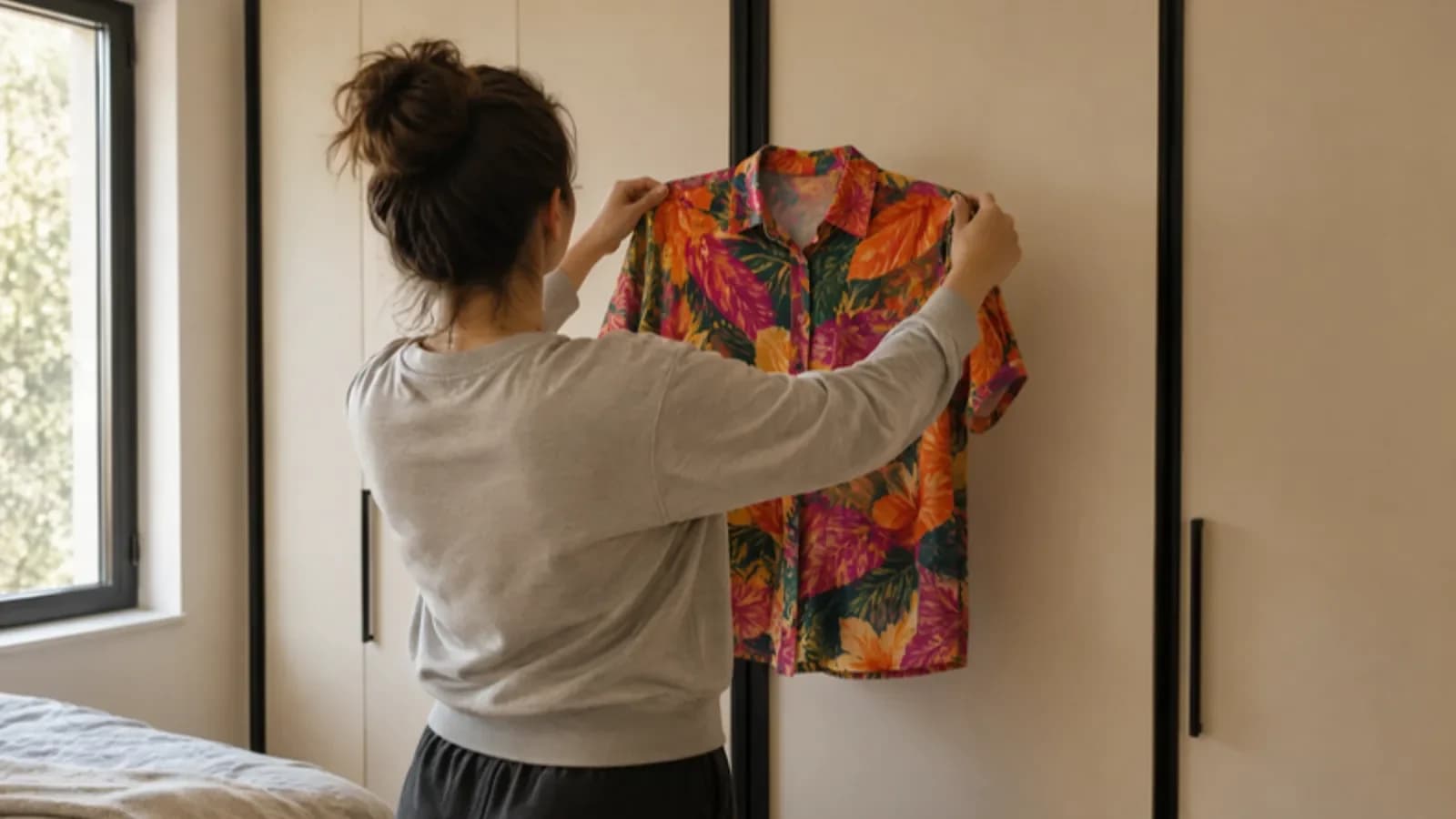
If your wardrobe has quietly filled with black, white, navy and beige, you are not imagining it. Neutral clothes are easy to mix, widely stocked, and often sold as the “safe” choice. They have their place. They do not have to be the whole story.
Wearing more colour is not a personality transplant. You do not need a new wardrobe, a new shopping habit, or a perfect set of “rules”. You need one or two pieces you already like, and a simple way to wear them so the outfit feels like you rather than a costume.
What people mean by dopamine dressing
“Dopamine dressing” is a fashion nickname, not a medical instruction. People use it to describe wearing colours, textures or clothes that feel joyful, rather than defaulting to a cautious palette. The name comes from the idea that bright or favourite colours can lift your mood.
That is a lovely reason to get dressed, and it is also easy to overclaim. Colour can change the feel of a day, and people do have strong associations with particular shades, but a yellow jumper is not a treatment. If you want the careful version of what research can and cannot say, we have written about colour, emotion and the science.
For everyday dressing, a simpler test is enough: do you feel more like yourself in the colour? If the answer is yes, that is a good place to start.
Start with the colourful clothes you already own
Before you buy anything, open the wardrobe and look for the colour you usually push to one side. The bright shirt you save for holidays. The scarf that feels “a bit much” for the shops. The pair of socks that always make you smile and almost never leave the drawer.
Try this, in order:
- Choose one colourful item you already like wearing, even if you only wear it at home.
- Put it on with clothes you already trust — jeans, a white tee, a navy jacket, a simple skirt, a plain dress.
- Look at the whole outfit, not only the bright piece. If it feels like too big a leap, keep the rest quieter.
- Wear it for an ordinary errand, not only a special occasion. The point is to let colour into a normal day.
Our 30-ideas guide has a short wardrobe section along the same lines: shop your own clothes first, start with one accessory, and repeat a small detail. That is still the gentlest way in.
Why so many wardrobes turned beige, and why that need not stop you
Neutral fashion has had a long moment, sometimes under names such as quiet luxury, and sometimes simply because beige, cream and black are easy to produce and easy to pair. We have looked at that shift, and at signs of renewed interest in colour, in Why did our wardrobes turn beige?.
The useful takeaway for getting dressed is this: a palette can become a habit. If most of what you see in shops and feeds is muted, it is easy to believe that colour is somehow less grown-up, less professional, or harder to wear after a certain age. It is not a law. It is a fashion weather system, and weather changes.
If you like your neutrals, keep them. They make excellent partners for one vivid piece.
Easy ways to wear a bright colour
You do not have to dress from head to toe in primary colours on day one. These approaches are enough for most people, including anyone who feels a little rusty with colour.
- Let one piece lead. A bright dress, a bold jumper, a colourful coat or a pair of statement trousers can carry the outfit. Keep shoes and a bag simpler if you want the colour to feel considered rather than busy.
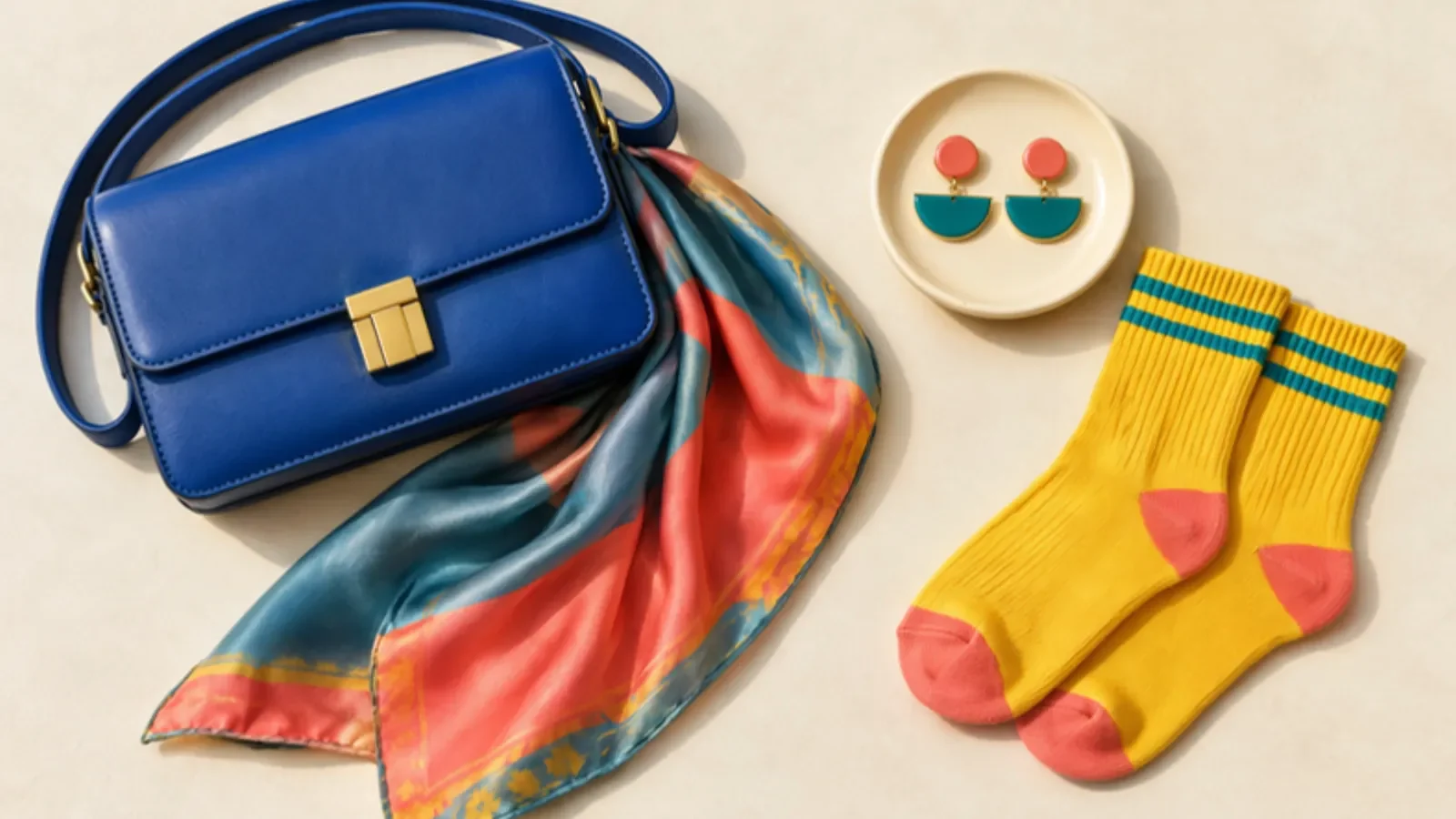
- Start with an accessory. A scarf, pair of shoes, earrings, socks or a bag is a low-commitment trial. Borrow one if you are not ready to buy.
- Repeat the colour once. If you wear a cobalt jumper, let a similar blue appear in a sock, a hair clip or the edge of a scarf. Two related notes often look more intentional than a single isolated flash.
- Use a print as a short cut. A floral, stripe or abstract print that already mixes a bright shade with softer ones can be easier than pairing two solid blocks of colour. You can then pick one of those shades and echo it.
- Anchor brights with something calm. White, cream, navy, denim, tan and black are useful here. A scarlet shirt under a navy jacket, or a green skirt with a white tee, gives the colour a place to sit.
If you want to go further, try colour blocking: wearing two or three solid colours together, such as a pink top with an orange skirt, or a yellow jumper with cobalt trousers. A common starting point is to pair colours of a similar strength — bright with bright, or soft with soft — so one does not make the other look accidental. There is no official correct pair. If a combination feels good in the mirror and you can move through your day in it, it is working.
Build a small colourful “palette” without a new wardrobe
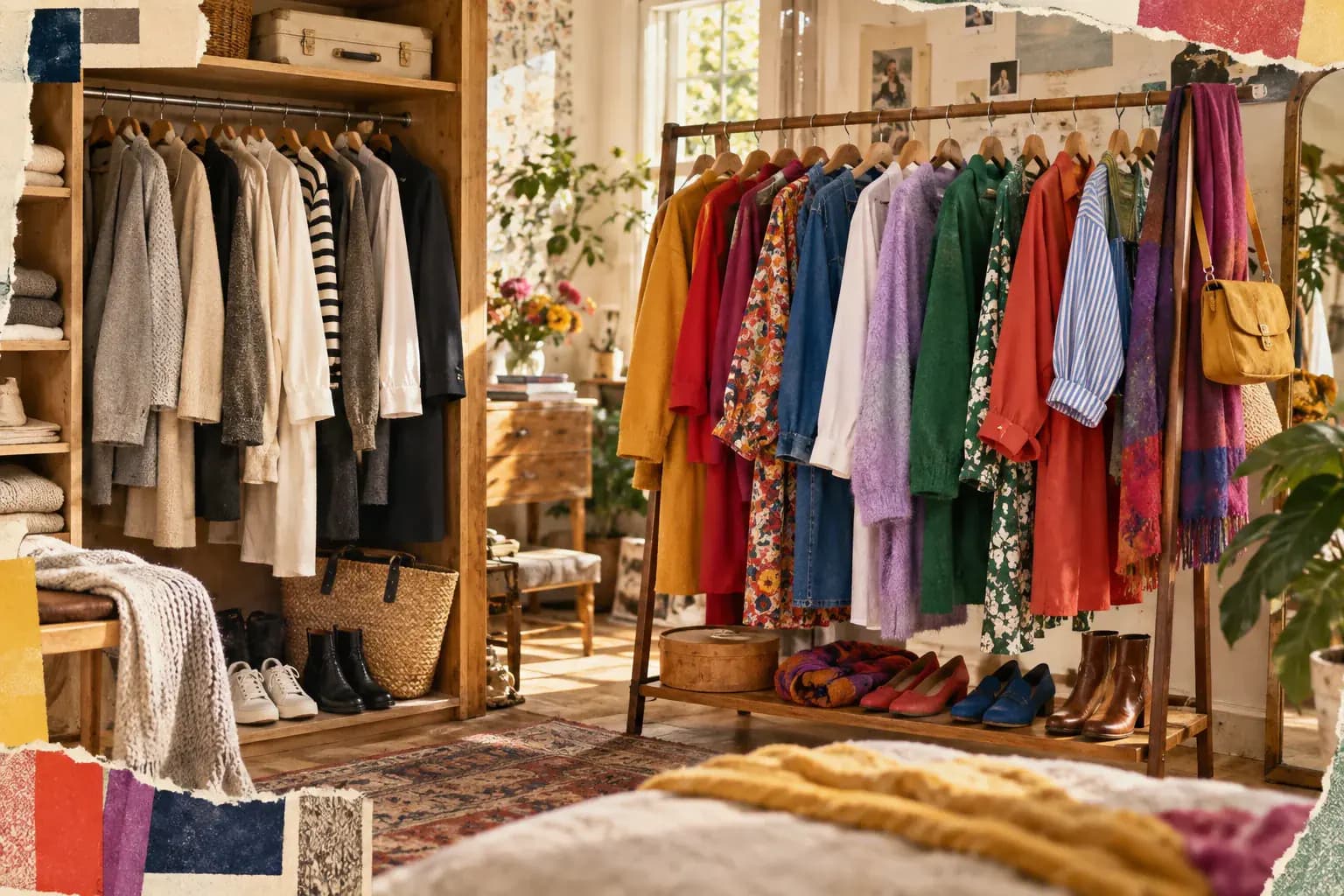
Once you have worn one bright piece a few times, look at what you already own and see whether two or three items could share a colour family: all warm reds and pinks, or all greens and teals, or a favourite yellow.
You do not need a capsule wardrobe with a name. You only need enough overlap that getting dressed does not feel like a puzzle. Three related pieces — a top, a scarf and a pair of shoes, for example — can get you through a week of more colourful outfits.
When you do need something new, it is often worth looking second-hand or at smaller makers, especially if the high-street range in front of you is mostly stone and black. Our Colour Partners directory includes Australian clothing and accessory businesses chosen because they offer genuine colour. A scarf, a pair of earrings or a second-hand shirt is usually a better first purchase than a complete outfit you are not sure you will wear.
A few practical notes
Colour looks different in bathroom light, office light and Queensland midday sun. If you can, check an outfit near a window before you leave. If you work somewhere with a dress code, you can often still use colour in a tie, a knit, a dress under a blazer, or shoes that the rules do not mention.
Comfort matters as much as the shade. A bright fabric that itches, pulls or needs constant adjusting will not become a favourite, no matter how lovely it is on a hanger. Choose pieces you can sit down in, walk in and forget about for an hour.
And if a colourful outfit attracts a comment, you are allowed to take it as interest rather than criticism. People notice colour. That is part of the point.
Wear the bright thing on a Thursday. Wear it to the shops. Wear it with the sandals you already like. Dopamine dressing, in the only sense that matters here, is simply giving yourself permission to enjoy getting dressed again — one colourful choice at a time.

Join the conversation
Keep it constructive, curious and kind. Comments are moderated before appearing.
No published comments yet. Start the conversation.