

A front door is a small surface with a lot of personality. It is the first colour many people see when they visit, and it is often a more manageable project than a whole room. If you have been craving a bit more joy at the entrance to your home, this is a satisfying place to start.
You do not need a new door, a renovation, or a perfect “trend” colour. You need a shade you will enjoy seeing every day, a finish that suits the door you already have, and a clear idea of whether you are allowed to paint it.
Why the front door is a good place to start
A door is a contained project. You can usually finish it in a weekend once the preparation is done, and if you change your mind later, you are repainting one object rather than a whole façade.
It is also a chance to practise choosing colour in real light. Australian daylight can be bright and direct, especially in Queensland, and a hue that looked gentle in the shop can look much stronger on a sunlit porch. That is useful information, not a reason to stay beige. It simply means you should test the colour on your door, in your light, before you commit.
If you would like a wider list of small projects, our free 30-ideas guide includes a doorway prompt, and our low-risk ways to add colour article talks about painting one contained area, with permission where needed.
What to check before you open a tin
A beautiful colour is not worth a disagreement with a landlord, a body corporate or a neighbour who shares the entrance. Take a moment to sort this out first.
- If you rent: read your lease and ask for written permission before painting. Many agreements treat the front door as part of the property you must return in a similar condition. If painting is not allowed, skip to the no-paint ideas below.
- If you have a body corporate or owners corporation: check the by-laws. Shared buildings often have rules about visible colour, especially on doors that face a common walkway.
- If the building is heritage-listed or in a character precinct: local rules may limit what you can change on the street front. Your council can tell you whether approvals apply.
- If the door is not all yours: a side gate you share, a garage pair, or a door that belongs with a neighbour’s paint scheme may need a conversation before you start.
- If the door’s condition is uncertain: flaking paint, rust, rotting timber or an unknown old coating may need repair, or advice, before any new colour goes on. Do not sand or strip older paint unless you know it is safe to disturb.
A short email or letter, with a photo of a sample, is often enough to get a clear yes or no.
How to choose a colour you will still like next year
Stand in your entrance at more than one time of day. Morning shade, harsh noon light and a warm evening all change how a colour reads. Look at the surfaces already around the door: brick, render, weatherboard, stone, window frames, the roof, even the path. A colour does not have to “match” these things, but it should sit comfortably with them.
A simple way to test:
- Buy a sample of your favourite, and one slightly softer and one slightly deeper version if you are torn.
- Paint each onto a board or a spare piece of card, not only a tiny swatch.
- Tape the samples to the door, or stand them against it, and live with them for a few days.
- Look at them dry, in sun and in shade, and at night under your porch light.
- Notice how you feel when you come home. The right colour is the one that still makes you smile on day three, not only in the first five minutes.
If you are choosing an exterior paint, pick a product made for the door’s material — timber, metal, or a factory-finished surface — and follow the preparation and weathering guidance on the tin. In a hot, sunny position, that suitability matters more than the name of the shade.
Hardware is part of the picture too. Existing brass, chrome, black or ceramic handles will change how a colour feels. You can often leave perfectly good hardware as it is. If you do replace it, keep the original fittings in a labelled bag, which is especially helpful in a rental or if you may sell later.
Colour starting points, not rules
There is no single correct front door colour for Australian homes. The best one is the one that suits your house and your taste. These are simply starting points if you would like somewhere to begin.
- A confident green. From deep forest to a fresher leaf green, this family sits well against pale render, cream weatherboard and many bricks. It feels lively without having to be neon.
- A clear mid or deep blue. Blue can look calm on a shaded porch and much brighter in full sun, so samples are important. Navy is a classic; a richer teal or turquoise is a more unexpected step.
- A warm red or terracotta. Red doors have a long history for a reason: they read as welcoming from the street. A brick or terracotta red is often easier to live with than a very cool, bluish red.
- A cheerful yellow or ochre. Yellow can bring a lot of life to a south-facing or shaded entrance. Test it carefully in direct sun, where some yellows become much louder.
- A soft but definite colour. You do not have to jump from greige to scarlet. A dusty rose, a warm clay, a muted apricot or a gentle sage can still feel colourful beside a street of grey and white doors.
If you love a bolder hue, you can often balance it with simple details: a plain mat, tidy planting, and hardware that does not compete. The door can be the lively note, and everything around it can stay quiet.
If you cannot paint the door
Plenty of people cannot change the door colour, or do not want to just yet. You can still give the entrance a lift.
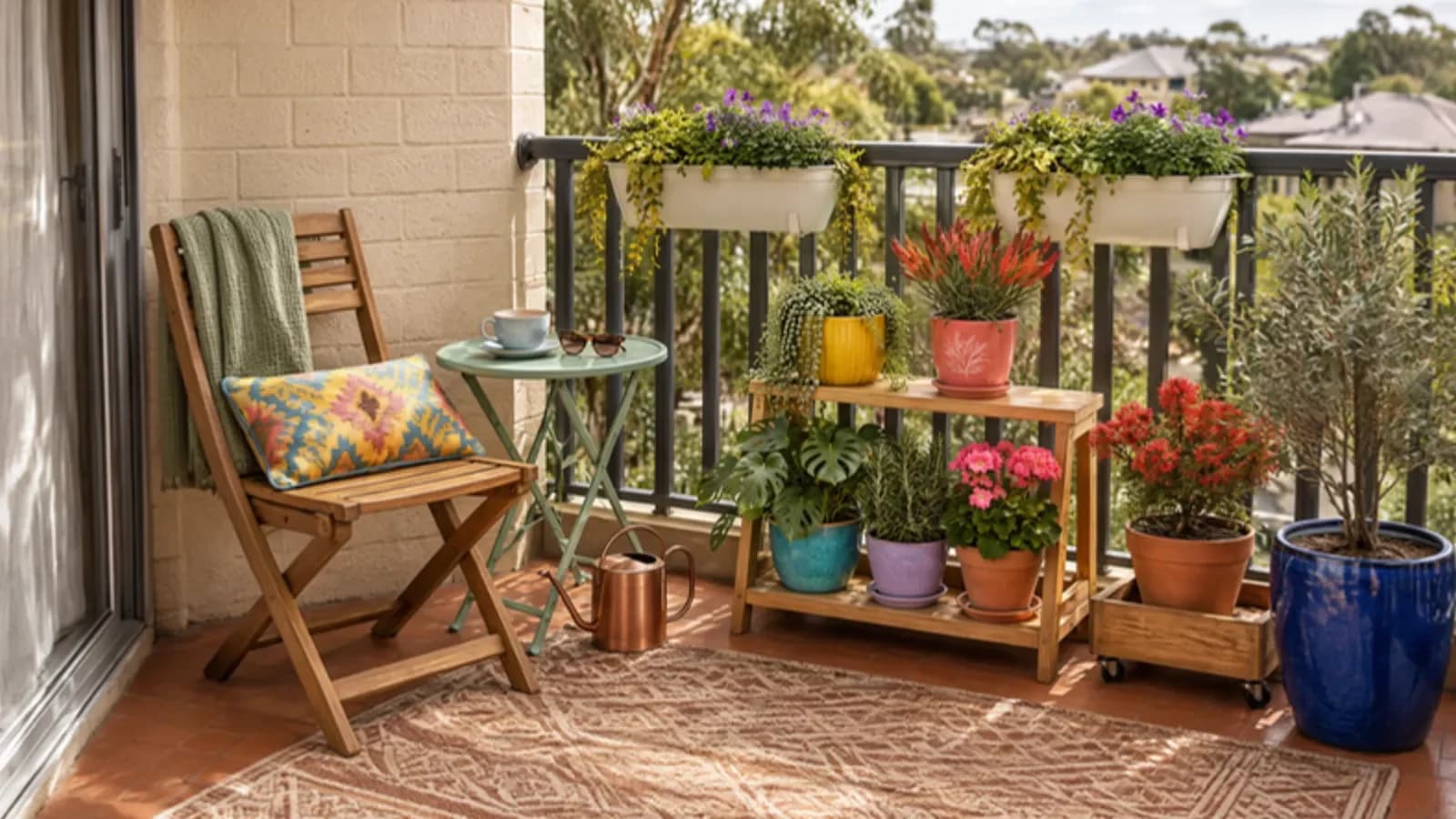
- Place a pair of pots, or even one generous pot, in a colour you love. Choose plants that suit your light and climate. For Brisbane and South East Queensland, our guide to colourful flowers that thrive locally is a useful starting point.
- Change the doormat to something with a clear colour or pattern, as long as it sits safely and does not create a trip hazard.
- Add a wreath, a seasonal stem, or a simple hanging, if the hook or hanger will not damage the door and is allowed where you live.
- Use a colourful outdoor cushion on a bench, or a painted stool you already own, if the entrance is wide enough to keep clear for coming and going.
- Clean the door, polish or gently refresh the hardware, and tidy the area. A well-cared-for entrance makes even a modest colour accent look intentional.
These are also good trial runs. Live with a colourful pot or mat for a month and you will know more about the colours you actually enjoy.
A simple way to finish the job
When you can paint, keep the process unhurried. Remove or mask the hardware, prepare the surface as the paint instructions require, and work in a temperature and weather window the product allows. Two thinner coats usually look better than one heavy one. Let it cure properly before you start leaning parcels against it.
Then step back and enjoy it. A colourful front door will not change your whole house, and it does not need to. It is one clear decision that says you are allowed to like what you like.
If you do paint a door, or find a clever way to brighten an entrance you cannot repaint, you are welcome to share the story and a photo with the community. Someone else may be waiting for a little permission of their own.
Join the conversation
Keep it constructive, curious and kind. Comments are moderated before appearing.
No published comments yet. Start the conversation.